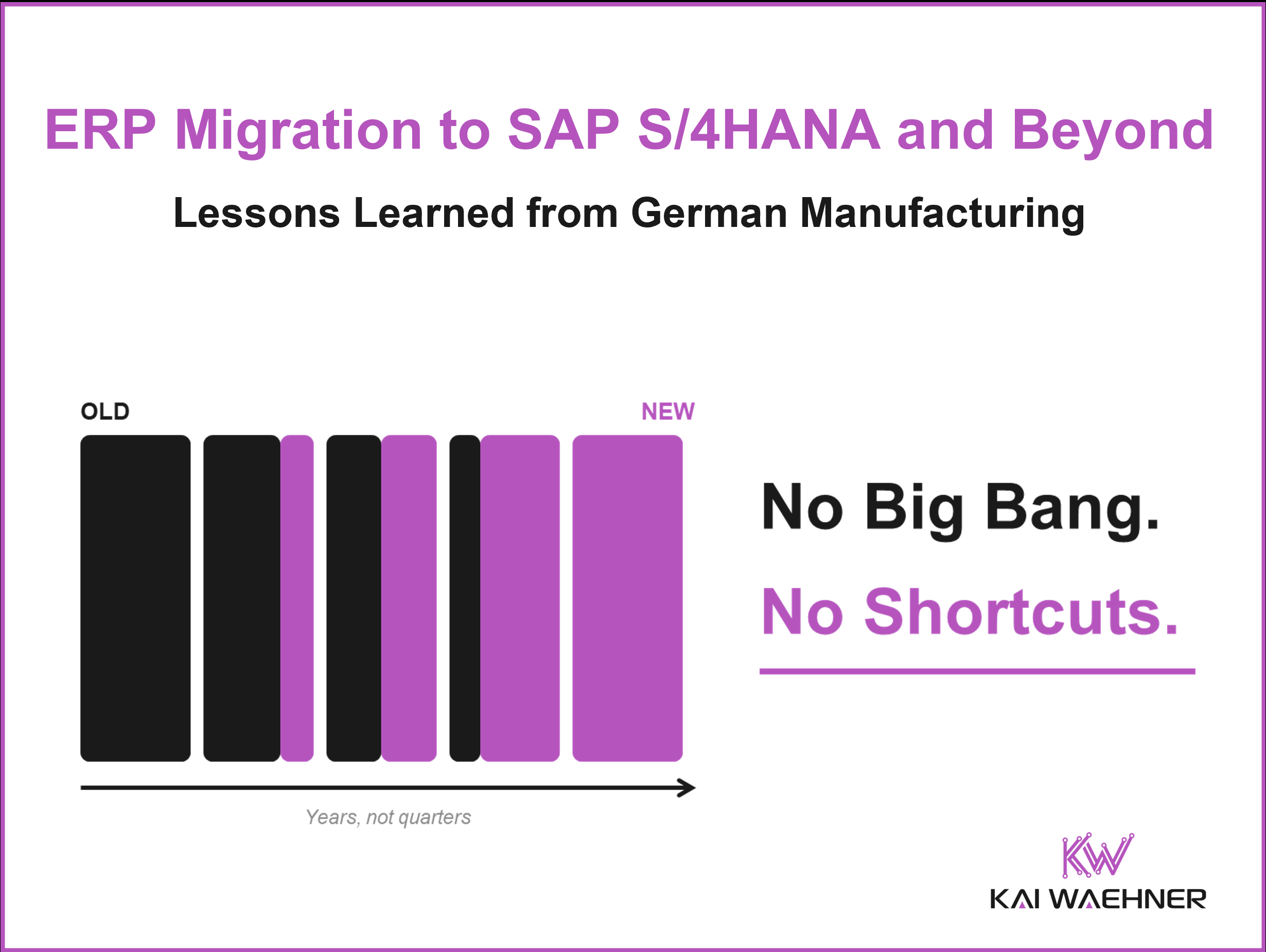
ERP modernization is a multi-year journey. The technology gets the headlines, but the work that decides success or failure happens in the process layer. Master data, production logic, material flows, traceability across the supply chain. When these are sorted, the platform migration is the easy part. When they are not, no cloud SKU or AI agent will save the project. Manufacturing leaders across Germany are running this play right now. Some are mid-flight in S/4HANA migrations. Some have left SAP for focused mid-market products. Others have rebuilt their plants around the new ERP as the foundation for Industry 4.0. The vendors differ. The industries differ. The lessons keep showing up in the same order.
This post is written from the perspective of a vendor-independent practitioner. The goal is not to recommend a product. The goal is to lay out the patterns that decide whether an ERP modernization project lands.
The three customer stories referenced below were published in the Digital Manufacturing 2/2026 issue from WIN-Verlag, together with an expert survey of ERP vendors and a feature on AI agents in ERP. It is one of my favorite resources for following digital transformation in the industrial space.
Three Migrations, One Pattern
The three cases below span a global foundry, a mid-market valve maker, and an office furniture producer. The vendor choices differ. The migration patterns do not.
Fritz Winter Eisengießerei: Consolidate Before You Migrate to SAP S/4HANA
Fritz Winter is a German foundry group with high vertical integration, complex casting specifications, and a production footprint spread across multiple sites. The core question before the S/4HANA project was whether to migrate the platform and the process redesign in parallel, or to consolidate the operational base first.
Together with the Bremen-based SAP consultancy abat, Fritz Winter chose consolidation first. The existing non-SAP production system was moved fully into SAP ERP, with new material levels, redesigned warehouse logics, and reorganized manufacturing processes. Modules in scope included MM, SD, QM, PP, PLM, PM, plus SAP LMPC Heijunka for digital production planning and SAP MII for shop-floor bookings. SAP DMS was integrated for engineering drawings.
The original timeline was pushed by one year. For a company of this size, that is not a trivial decision. It reflects a quality bar where structural stability beats short-term schedule commitments. The actual cutover happened over an extended weekend, followed by a two-week hypercare phase.
The point of the project was not the migration itself. It was the structural cleanup that made the migration possible.
Adams Armaturen: Out of the Legacy ERP, Into Project-Centric Manufacturing
Adams Armaturen is a family-owned valve manufacturer in Herne. The product mix splits between machined cast valves and welded special constructions, with lot sizes typically between one and seven. Power plants, water utilities, petrochemicals, district heating, oil and gas. About 250 employees.
The legacy ERP had been pushed past its limits. It was built for larger volumes, the usability was poor, the database structure showed gaps, and the maintenance window for the installed release was ending. Adams ran a structured selection with three vendors and chose ams.erp from ams.Solution, which is focused on project manufacturing.
The migration moved 17 million data records. The implementation was preceded by a deep process definition phase, including an interface from the Edge PLM Compact PDM system into the ERP, which had been required by the design team. This front-loaded effort paid off. The actual implementation ran smoothly given the company size and the depth of ERP usage.
Highlights worth noting:
- Modules added alongside the standard package: ams.dms for document management, ams.bi for business intelligence, ams.export for customs.
- Dashboards built by internal IT became the operational backbone for sales, purchasing, and work preparation.
- 3D drawings from construction now flow through to detail drawings automatically. Even constructive changes are handled without rework friction.
- A central goods receiving point was introduced. Material deliveries without a corresponding purchase order in the ERP no longer exist.
Reiss Büromöbel: ERP as the Foundation for Industry 4.0
Reiss is an office furniture manufacturer in Bad Liebenwerda, Brandenburg. The company spent around 30 million euros on its digital transformation, including a new plant of more than 12,500 square meters and the introduction of the variant-management ERP VlexPlus from VLEXsoftware.
The starting point was a familiar problem in mid-market manufacturing. The previous ERP had been extended over years with custom developments, each of which made future updates harder. The 2014 decision was to install a fully new software generation before the plant investment.
What made the selection process specific was the combination of high variant complexity, deep manufacturing scope across metal and wood, and the requirement for an open integration architecture, especially toward financial accounting. VlexPlus won on variant management depth, an integrated product configurator, and a Java-based architecture that the customer felt would carry forward.
In production, the system today drives:
- Order-based manufacturing with daily loading schedules, so ordered goods can leave the plant the same day.
- An automated panel warehouse and cutting center, integrated for cut optimization across orders.
- Lot-size-1 production without sacrificing economics, including the option to switch from batch to daily one-piece flow when demand justifies it.
- Electronic data exchange via the OFML interface (Office Furniture Modeling Language) for webshops, sales portals, and configurators.
The ERP did not just modernize the back office. It became the prerequisite for an Industry 4.0 plant.
Lessons Learned
Across the three projects and the broader expert survey from ERP vendors, the same themes keep recurring. None of them are about technology in isolation.
Optimize Business Processes Before the Migration
The Fritz Winter foundry case is the best example. The decision to consolidate first and migrate second sounds slower, but it shortens the eventual S/4HANA project because the data structures and process logic are already harmonized. Cloud ERP systems push standardization. Companies have to question historically grown processes rather than migrate them one-to-one.
This is where most projects get into trouble. Years of customizing have built up implicit knowledge that no one wrote down. Cloud migration forces this knowledge into the open. Successful companies treat the migration as a strategic realignment, not as a lift-and-shift.
For Adams, the front-loaded process definition was the reason the technical implementation went smoothly. The construction team pushed for the PDM-ERP interface from the start, instead of accepting manual data transfer as a temporary workaround. The early decision saved months of rework later.
Integration Is the Real Project (ERP, MES, PLM, Shop Floor)
None of the three manufacturers built standalone ERP. Fritz Winter integrated SAP MII for shop-floor bookings and SAP DMS for drawing management. Adams connected Edge PLM Compact for design-to-production handover. Reiss linked VlexPlus to the automated panel warehouse and to an MES fine-control system in the new plant.
The architectural target is bidirectional integration across the full stack. ERP and MES are the primary axis, with production orders flowing down and actual times and quality data flowing back. PLM feeds design data in from the engineering side. Shop Floor systems and IoT close the loop with sensor and machine data. None of these layers can be treated in isolation.
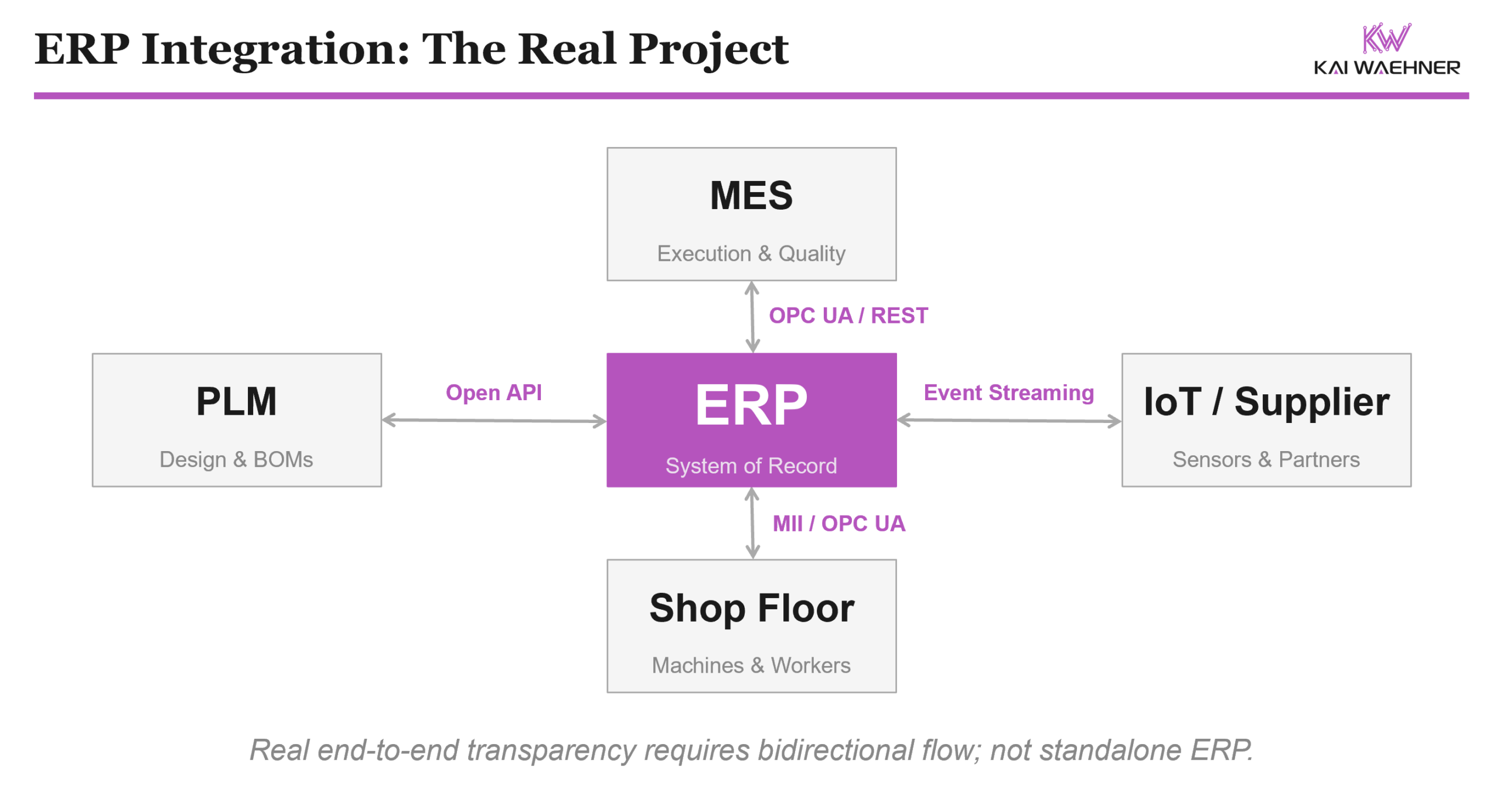
One clarification worth making explicit: the ERP is the system of record for business logic, planning, and financials. The MES is the system of record for shop floor execution. Both layers need their own integrity. The bidirectional flow between them is what makes the architecture work, not the ERP governing everything below it.
Real end-to-end manufacturing transparency needs a clear architecture model like ISA 95, consistent master data across ERP and the broader integration stack, and standardized interfaces like OPC UA and open APIs. This is where the ERP decision ends and the broader architecture begins.
From Paper to Digital, With Traceability Across the Chain
Adams Armaturen is the most concrete example here. Sales used to work with binders. Purchasing printed delivery notes for manual checkoff. After ams.erp, everything runs digitally. Order tracking, change handling, dashboards. The same dynamic applies in regulated industries. Fritz Winter set up a continuous prototype and sample process to make automotive sample-part documentation auditable across product levels.
This matters for two reasons. The first is OEE and operational visibility, which is hard to improve when half the data lives in paper folders. The second is legal compliance. Auditable trails across the supply chain are no longer optional in regulated segments. Pharma, automotive, medtech, food, energy. The digital backbone makes them possible.
Cloud vs On-Premises Is a Spectrum, Not a Switch
The cloud question comes up in almost every ERP modernization conversation, and the answer is rarely binary.
Cloud migration is a real process modernization opportunity. Best-practice templates, faster updates, and reduced infrastructure burden are genuine advantages. But the classic mid-market hurdles are also real: budget and staffing for the transition, integration complexity with existing shop-floor and IT systems, and the organizational change that comes with standardizing historically grown processes.
A hybrid deployment model is increasingly the practical answer. Most manufacturers end up running some workloads in the cloud and keeping others on-premises, not by accident but by design. AI workloads in particular deserve a separate deployment conversation. Data sovereignty requirements and the risks of sending production data to public LLMs push many manufacturers toward on-premises or private cloud for AI specifically, even when the rest of the ERP estate moves to public cloud.
For SAP-specific cases, the deployment options matter:
- A Lift-and-Shift from SAP S/4HANA On-Premises or ECC to a Private Cloud is the lowest-risk path technically, since the existing system carries over largely unchanged.
- A Greenfield move to S/4HANA Public Cloud is heavier, because two product architectures collide. Start at zero, audit existing processes, adapt to the target system.
- The trade-offs need to be evaluated. Public Cloud gives you the full SaaS benefit set afterwards: automatic updates, lower infrastructure overhead, faster access to new AI capabilities as they ship, and vendor-managed security and compliance.
The summary is uncomfortable but accurate: there is no single right answer. It depends on customizing depth, regulatory environment, integration footprint, and the willingness to standardize.
ERP Modernization Is a Multi-Year Journey
Reiss started the ERP rollout in 2015 and went live in 2017. The Industry 4.0 plant came online in late 2019. Fritz Winter consolidated into SAP ERP and now starts the S/4HANA migration on top of that base. Adams planned for 2020 and shipped in 2021 with additional process refinement work in between.
These are not weekend projects. They span multiple budget cycles, multiple management teams, and multiple iterations of strategy. Companies that treat ERP modernization as a single event tend to fail. Companies that treat it as a sequence of structural improvements tend to succeed.
McKinsey’s recent benchmark data backs this up. Large enterprise ERP migrations typically cost between 100 million and 1 billion dollars, with one-off implementation costs making up the bulk of that. Payback periods for migrations used as a catalyst for business transformation run four to five years. The companies that treat the migration as a pure lift-and-shift see faster project completion but less business value. The companies that use it as a structural reset see longer timelines and higher payoff. The case studies above sit firmly in the second camp.
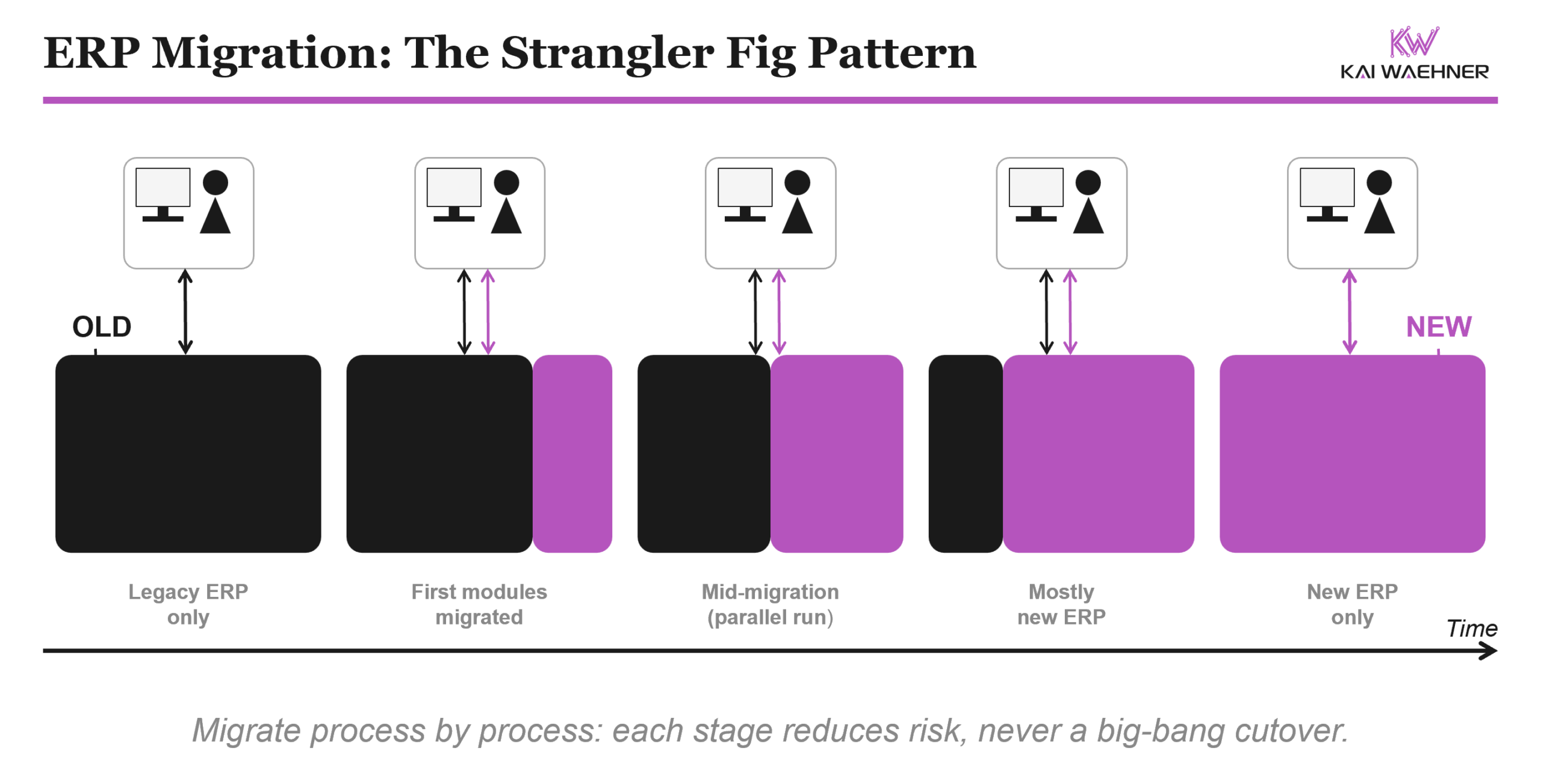
The underlying migration pattern is what software architects call the Strangler Fig. Legacy processes do not move all at once. They move one by one, with the old system shrinking as the new one grows. Each stage is a working system. Each transition is reversible. The big-bang cutover that defines most ERP horror stories is the anti-pattern. I covered the Strangler Fig pattern in depth in a separate post in the context of data integration and legacy replacement. The same logic applies directly to ERP.
Where ERP Connects to the Broader Architecture: Integration, Process Intelligence, Trusted Agentic AI
ERP modernization sits inside a wider architectural shift. The pattern that keeps showing up across manufacturers is a trinity of three foundations.
The first is data integration across the value chain. ERP, MES, PLM, IoT, supplier and customer data. This is the layer that determines whether information actually flows end-to-end or stops at every system boundary. The integration architecture decisions in the case studies above (SAP MII, SAP DMS, Edge PLM Compact, OFML, panel warehouse and cutting center) are all examples of this layer.
The second is process intelligence. Once data flows, the question is whether anyone can see how the processes actually behave. Process mining and observability across the order-to-cash and procure-to-pay flows turn the ERP from a system of record into a system of insight. Fritz Winter’s transparency benefits across stock management and production steps are exactly this layer in action.
The third is trustworthy agentic AI on top of those foundations. AI agents that analyze business contexts, access structured information, execute operations, and document their conclusions. AI in ERP is moving from individual use cases to continuous AI support across all business processes. Microsoft’s Dynamics 365 Supplier Communications Agent reads incoming supplier emails and updates orders. Sage’s Copilot Insights warns proactively in process context. SAP’s Joule and Agent Gateway take the same direction.
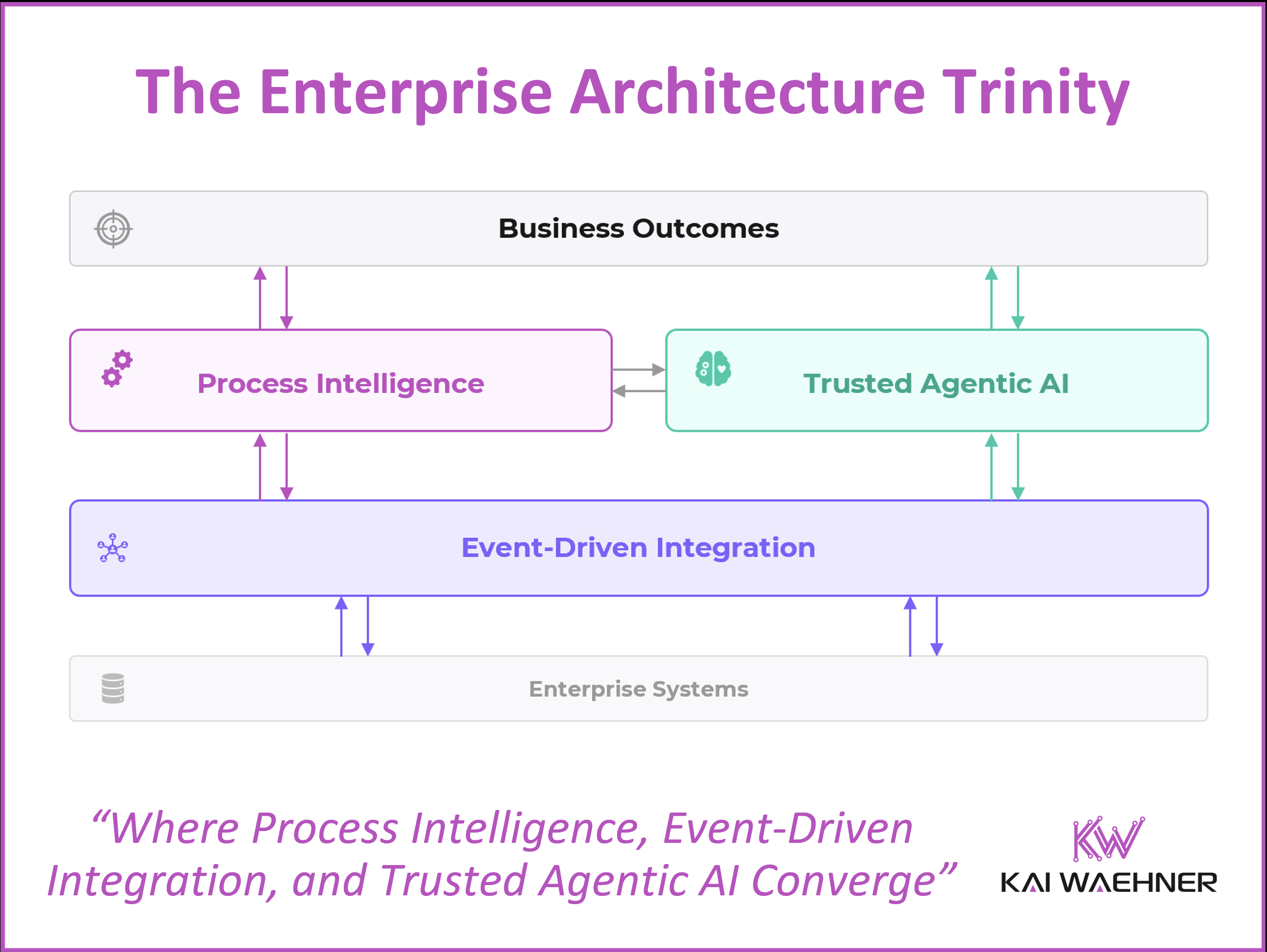
The order matters. AI agents on a fragmented ERP estate produce confident-sounding noise. AI agents on a clean, integrated foundation produce useful actions. The migration projects described above are how that foundation gets built. The trinity of data integration, process intelligence, and trusted AI layers all need to be present.
McKinsey’s analysis goes further, claiming that AI can reduce ERP implementation effort by at least 50 percent and cut program duration by half. The claim is worth treating with skepticism. AI tooling for ERP delivery is real and improving, but most of the implementation effort sits in process redesign, change management, data cleansing, and integration work. None of those compress to zero just because a code-generation tool got better.
What This Means for ERP Selection and Modernization
A few takeaways for manufacturing leaders working through their own ERP roadmap.
- Treat process redesign as Phase Zero of the migration, not as something to do later. Fritz Winter delayed go-live by a year on purpose. The structural cleanup made the eventual S/4HANA migration possible. Companies that skip this step pay for it during cutover.
- Plan the integration footprint up front. ERP, MES, PLM, shop-floor systems, document management, customs. Adams went live with eight modules and a PDM interface in parallel because the architecture was decided early.
- Master data is the multi-year work. Bills of materials, work plans, variants, materials. Without clean master data, AI and cloud both fail. Every expert in the survey said this in different words.
- Cloud is a deployment choice, not a destination. Lift-and-shift to private cloud, greenfield to public cloud, hybrid, on-premises for AI workloads with data sovereignty constraints. The right answer is operational, not ideological.
- Pick the vendor that matches your manufacturing profile, not the one with the loudest marketing. A focused mid-market product can outperform a Tier 1 platform in the right niche. The vendor selection question gets its own treatment in the next post.
- ERP modernization runs in years, not quarters. Plan for it, fund it, and protect the timeline against short-term pressure.
The companies in these case studies did not transform overnight. They consolidated, redesigned, integrated, and modernized over multiple cycles. ERP modernization in practice looks like this.
The follow-up post takes on the vendor question directly. Why a manufacturer like Adams can be better served by ams.erp than by SAP, why Fritz Winter is right to stay with SAP, and where Microsoft Dynamics, Infor, IFS, Proalpha, and the rest of the landscape fit. Coming up next.
Stay informed about the latest thinking on data integration, process intelligence, and trusted agentic AI by subscribing to my newsletter and following me on LinkedIn or X.