 Kai Waehner
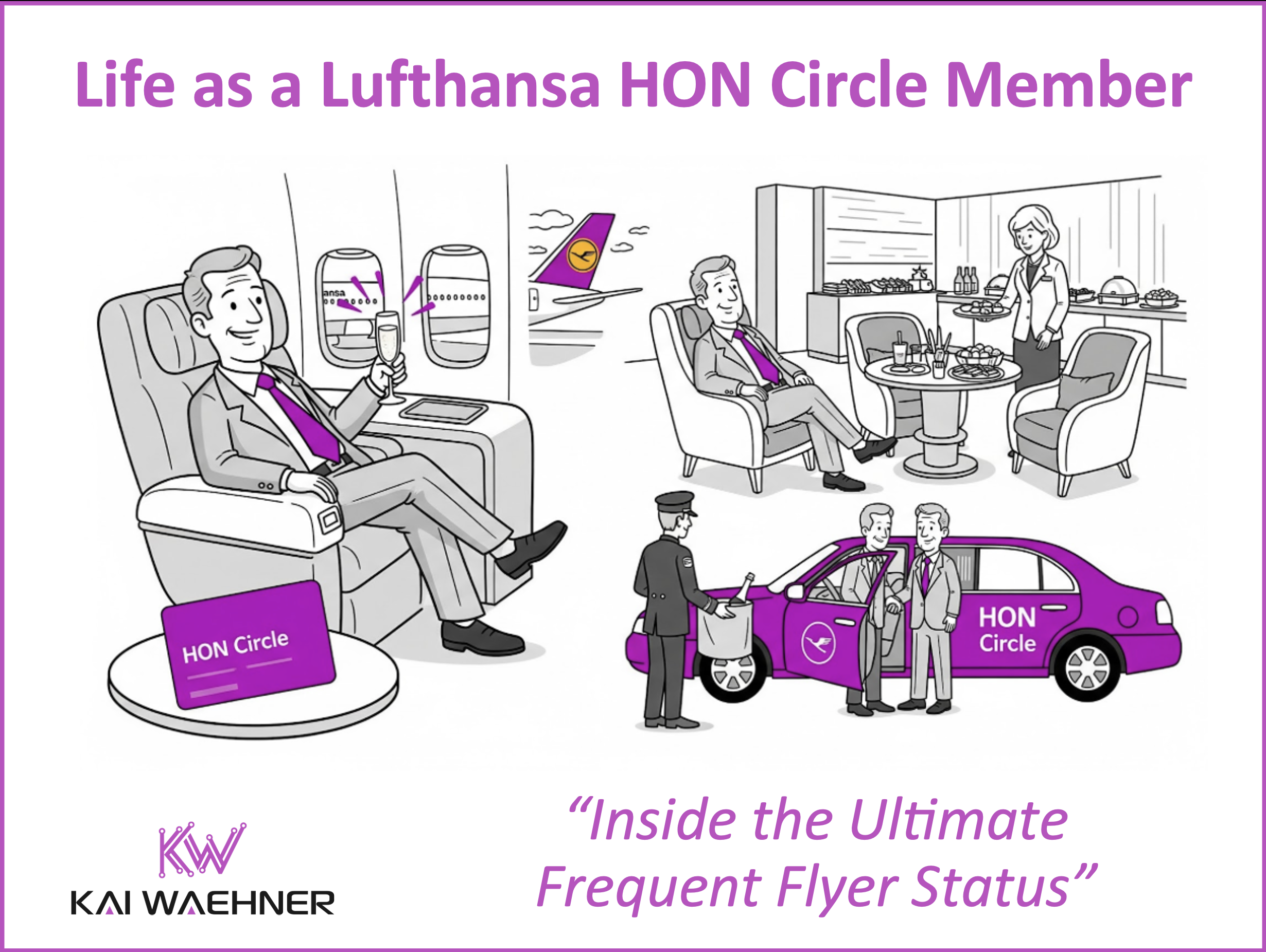
Lufthansa HON Circle status is the ultimate tier within the Lufthansa Group for frequent flyers. But the path to it is expensive and narrow. Only paid Business and First Class flights on Lufthansa Group airlines count. Since my company pays only for Economy on domestic routes or Premium Economy on long-haul flights, I cover the difference myself to fly Business Class and qualify for HON Circle status. This post explores what HON Circle membership is really like in daily travel: the perks, the trade-offs, and whether it is worth the personal investment.

HON Circle is the top tier of Lufthansa’s Miles & More program and one of the hardest frequent flyer statuses to achieve around the world. It requires flying exclusively on paid Business or First Class tickets with Lufthansa Group airlines, such as Lufthansa, SWISS, Austrian, Brussels Airlines, or Eurowings. Flights with Star Alliance partners outside the Lufthansa Group don’t contribute toward HON Circle qualification.
My company pays for Economy in Europe and Premium Economy on long-haul trips. I cover the upgrade to Business Class myself. It’s a major personal investment. But the benefits like First Class lounges, limousine service, and priority upgrades make frequent travel far more comfortable. As long as I travel this much, I plan to keep HON Circle, even if it means spending thousands every year.
At the time of writing this post, my first blog post sharing the journey to becoming a Lufthansa HON Circle member in 2025 has already been viewed by over 50,000 people. The audience likely includes not just travel geeks but also professionals working in the travel and loyalty industry. This follow-up continues that story, looking at what life as a HON Circle member is actually like: the good, the bad, and the practical realities behind it.
You will find how the HON benefits impact everyday travel, how I manage costs and flights to maintain the status, and what still needs improvement at Lufthansa Group (beyond HON Circle members).
The Benefits of Lufthansa HON Circle Status
The HON Circle status offers Lufthansa’s highest level of comfort and personal service. It turns frequent business travel into a smoother and more reliable experience. But it only makes sense if you travel a lot.
As Global Field CTO at a software company, I travel around the world to meet customers, partners and analysts, speak at conferences, and support sales teams on-site. I switch between countries, time zones, and use cases constantly. For that kind of schedule, every hour matters. Comfort matters too. HON Circle reduces friction, improves comfort, and saves valuable time in ways that most people never see. It allows me to stay productive and focused, even during long travel days.
I grew up in a small village in beautiful Bavaria, Germany, surrounded by fields and forests. Today, I travel around the world for work and spend many hours in Lufthansa First Class Lounges. They are not a luxury. They are part of my mobile office. Despite all the global travel, I still live in that same Bavarian village. I love it there and would not want to live anywhere else.
HON Circle is not for the casual traveler. It is designed for people who fly constantly. Yes, in theory, some travel bloggers claim you can get HON status for as little as 15,000 euros. You could earn the required status points by flying ten round-trips to Dubai with Eurowings, using their cheapest Business Class fares and adding a few low-cost Lufthansa feeder flights. Each trip comes to around 1,500 euros. But that completely misses the point. You would qualify without ever experiencing the real value of HON. That is not what the status is meant for.
Most HON Circle members likely spend 50,000 euros or more per year with the Lufthansa Group. They rely on the airline as a key part of their professional life, and it usually shapes their personal life as well. HON is not about upgrades or champagne. It is about cutting stress, avoiding delays, and keeping your work rhythm even when flying three or four times a week. Still, the extra comfort and touches of luxury are part of the experience. They do not drive the value, but they make the journey more pleasant.
The Lufthansa First Class Terminal and First Class Lounges
The overall lounge experience as a HON Circle member is outstanding and clearly a step above the standard options available to Frequent Traveller (FTL) or Senator (SEN) status holders.
The First Class Terminal (FCT) in Frankfurt is a unique experience in its own building, offering premium service and a sense of exclusivity. It attracts first-time First Class travelers, influencers, and frequent flyers, which can make it quite busy – especially during peak hours.
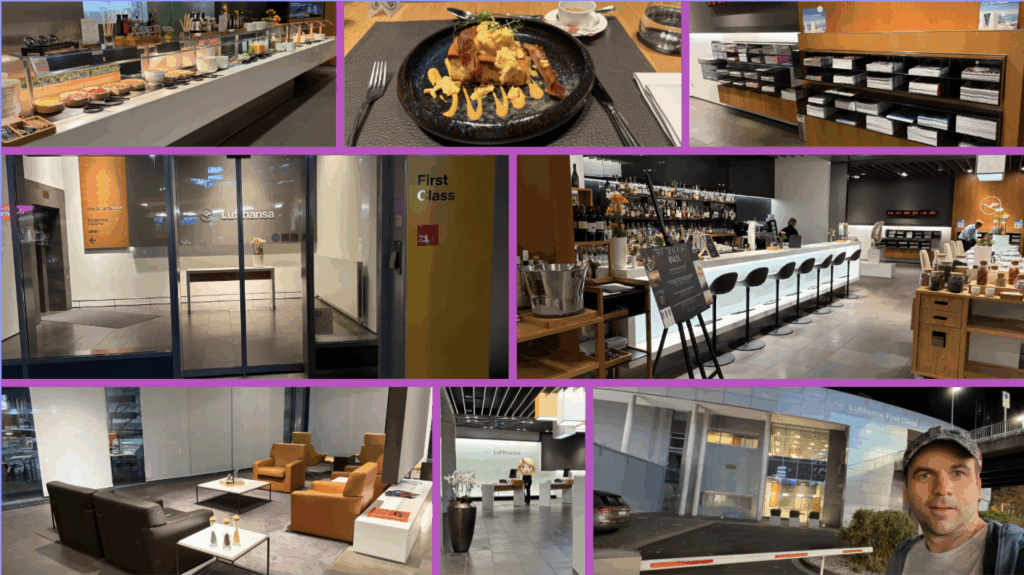
If the journey does NOT start in Frankfurt, the A or B lounges are usually the better option. They offer the same high-quality food and limousine service without the need for an extra security check. They’re also typically quieter and less crowded. However, the FCT remains special and worth a visit when there’s enough time between flights.
While most of my flights go via Frankfurt, the First Class Lounge experiences in Munich (Lufthansa), Zurich and Geneva (SWISS), and Vienna (Austrian Airlines) are also excellent. Each offers premium service with regional flair, local cuisine, and a design that reflects the airline’s home country.
I usually plan for at least 90 minutes between connections. The main reason is to avoid the stress of tight transfers, but also because I know it is a great experience. It gives me time to eat, get some work done, or simply unwind. In contrast, Lufthansa Senator lounges are often too crowded and noisy, especially since many Amex Platinum cardholders now have access. It is not yet as extreme as in the US where lounge access often involves standing in line, but the trend is heading that way.
One underrated feature of the First Class lounges is the extensive magazine and newspaper selection. While many use the time to relax or stream entertainment, I often use short-haul flights to catch up on print business media. The lounges provide a strong business-focused selection, along with sports, cars, and lifestyle titles. I still enjoy reading physical copies. They used to be available in Senator lounges in a smaller but decent selection. Since Covid, though, there are typically only a few newspapers left.
Food and Drinks in Lufthansa First Class Lounges
The food and drinks in Lufthansa’s First Class lounges are outstanding. It feels like fine dining in a high-end restaurant, with a full menu and several dishes to choose from.
For comparison, United’s Polaris Lounges in the US already set a high standard with their restaurant-style service: Access is limited to Business Class passengers, not based on frequent flyer status. Lufthansa’s First Class lounges, however, go one step further. The quality, variety, and presentation are on an entirely different level.
The food in the Senator Lounges has also improved in recent years. Still, the First Class lounges easily offer the best food available at any Lufthansa hub airport. I could expense restaurant meals when traveling for business, but I still prefer the food here over any restaurant in Frankfurt, Munich, Zurich, or Vienna. I often eat in the lounge, even on short-haul trips when connecting through Frankfurt on my way to London or Zurich.
This perfectly shows the value of the HON Circle service model. Why take a direct 90-minute flight from Nuremberg to Amsterdam with KLM or to Paris with Air France when a short connection in Frankfurt makes the journey much more pleasant? The experience on the ground – a calm workspace, great food, and limousine service – makes the extra stop worthwhile. And I need collect points for the next status renewal anyway.
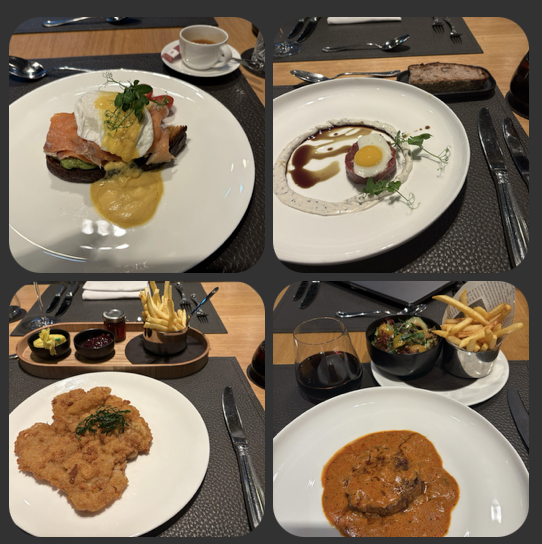
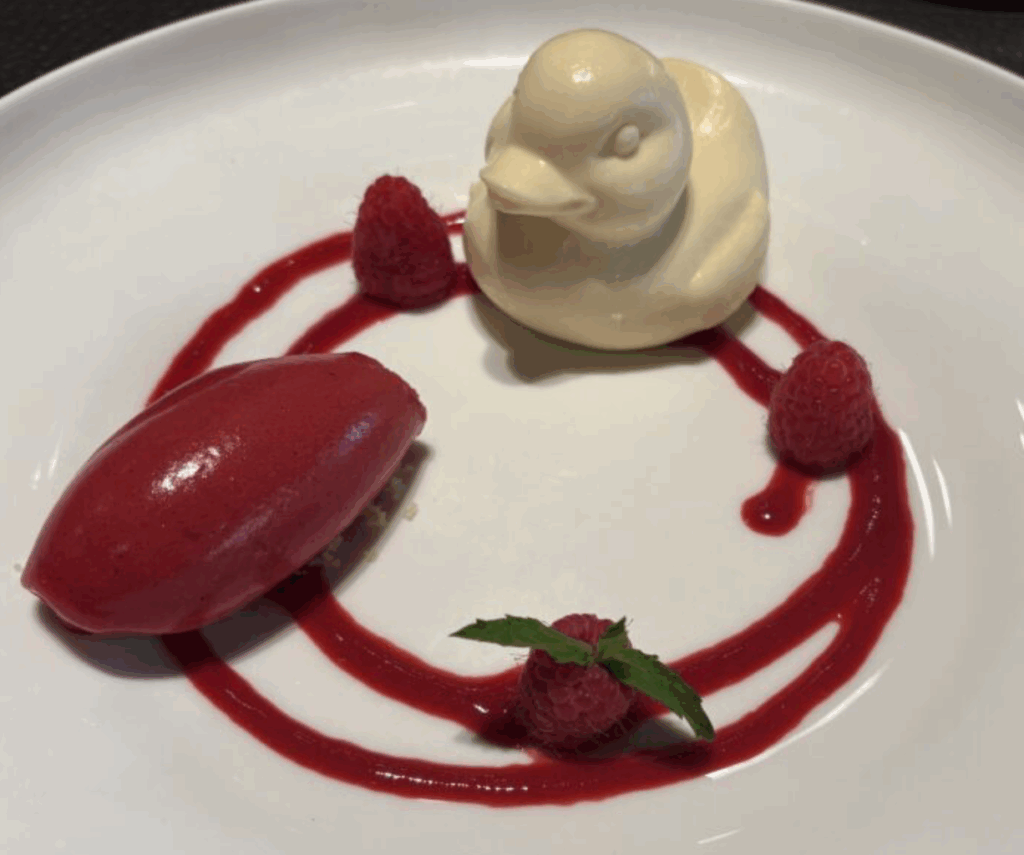
A few examples of dishes show this attention to detail:
The signature Lufthansa First Class duck with white chocolate and raspberry sorbet is one of my favorites. Even if I am not hungry, I almost always enjoy the dessert:
And often you get regular seasonal specials such as burgers, schnitzel, or fresh salads. These touches make every visit feel like a premium restaurant experience rather than an airport lounge meal.

Limousine Transfers and Ground Service
The limousine service shines when the aircraft parks at a remote stand with bus transfer. In Frankfurt, bus positions are common on European flights. When arriving from my home airport Nuremberg into Frankfurt, nine out of ten flights use a bus stand. On a typical return trip to London, this can mean four bus legs in one journey.
The regular flow means waiting several minutes until all passengers have exited, then a bus ride that often takes ten minutes or more. In bad weather, whether extreme heat in summer or freezing temperatures in winter, this becomes even more unpleasant and tiring. Sitting in the front of the aircraft as a HON, you step off, get into the car, and go straight to the terminal and the First Class lounge.
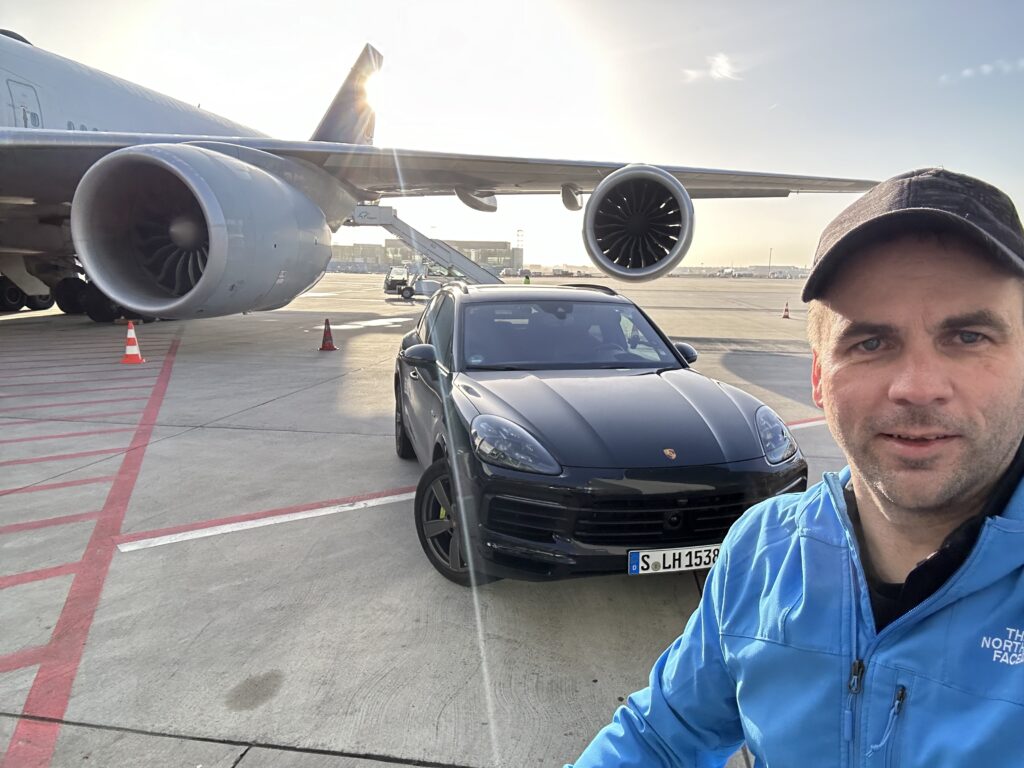
For boarding of the connection flight, the driver takes you directly from the First Class lounge to the aircraft and you usually enter before the bus opens. If your limousine arrives later, you can also wait and board after everyone else to avoid the crowd.
From the First Class Terminal, a car always takes you to your gate. This applies even if your flight departs from a regular finger gate. After ten or more rides, the excitement of the limousine service fades a bit. Still, it remains a very comfortable and stylish way to move around the airport. You board directly at the aircraft via the jet bridge. It’s the same gate area as other passengers, but you usually arrive using a private elevator without crossing paths with the rest of the crowd. If you sit in the front of the airplane, most other passengers don’t see you at all.
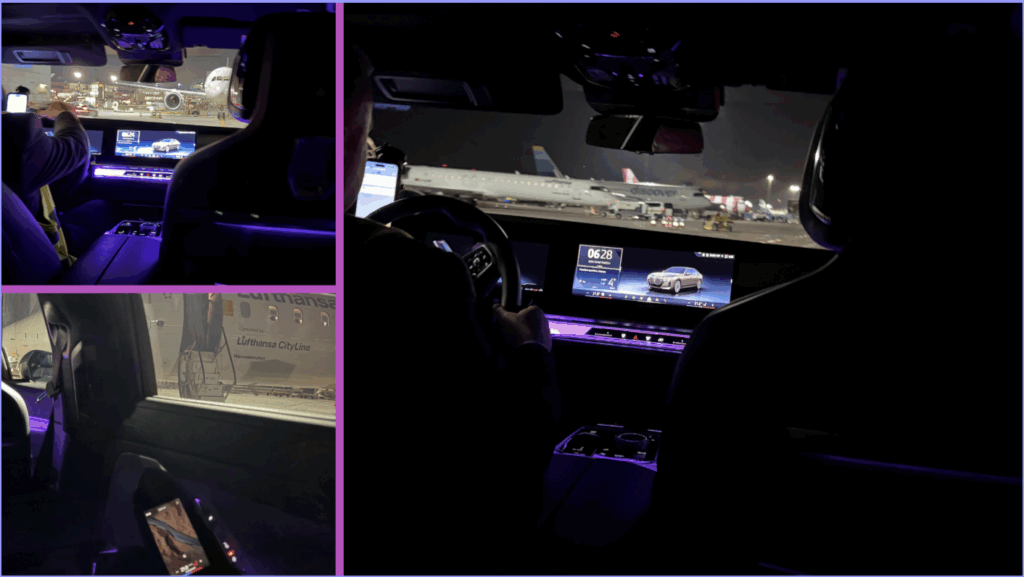
Unfortunately, Lufthansa ended its contract with Porsche. That was a cool touch and felt special every time. Now the limousine service is handled by SIXT, a German premium car rental and mobility company. You often get a nice BMW or another premium car. But if more than two passengers share the ride, it defaults to a van with four seats facing each other. That setup feels cramped. You sit knee to knee and have to move your feet to the side to avoid touching the person opposite. With SIXT as a partner and access to a large fleet, it should be easy to offer something more comfortable. It remains a mystery to me why Lufthansa squeezes HON Circle and First Class passengers into setups like this.
Gate-to-Gate Transfers: When Every Minute Counts
Lufthansa also provides last minute pick up for tight connections or delays. A car meets you at the aircraft and drives you straight to the next gate. This sometimes happens without HON status, but it is rare and usually limited to long haul connections where rebooking would be expensive for the airline. Importantly, it can happen even when both flights use finger gates, not only when remote stands require a bus.

HON Circle Customer Service
Lufthansa’s HON Circle customer service stands out for its reliability, flexibility, and personal touch; both on the ground and in the air. When flights are delayed or canceled, or plans suddenly change, HON Members experience a level of support that goes far beyond the standard service.
Ground Support and Irregularities
When disruptions happen, the HON hotline is proactive. Calls come in within minutes of cancellations or delays. Often this happens before the situation is even announced at the gate. There’s no need to race through the terminal to secure a new connection before others start rebooking. The HON service team handles it calmly and efficiently, often avoiding the common failures of Lufthansa’s overloaded rebooking systems and processes.
Rebooking options are also more flexible than for other passengers. Non–Star Alliance options are offered if they’re the best solution. For example, after a delay on a flight from Amsterdam to Frankfurt, I was going to miss my connection to Nuremberg and would have had to stay overnight in Frankfurt. Instead, the HON agent called me directly and asked if I wanted to be rebooked on a KLM flight from Amsterdam to Nuremberg. I agreed, and the process was smooth and fast. Other passengers typically only get such options if they push hard, as this kind of rebooking costs Lufthansa significantly more than putting someone on a next-day flight with a hotel stay.
In another case of a flight delay, no same-day connection was available after a First Class arrival in Frankfurt, so I was rebooked onto a Deutsche Bahn train to Nuremberg. Lufthansa promotes this train service as a premium alternative, but in reality, it comes with annoying challenges: walking to the station in bad weather, uncertain luggage handling, frequent delays, and often noisy train environments. Noticing the situation, the purser offered a bottle of champagne as a goodwill gesture.
On another occasion, after a First Class flight to Frankfurt, my connection was canceled, and I faced a six-hour layover. The purser brought me a caviar box as compensation. Since I couldn’t store it properly due to another flight later that day, I declined. He told me he would find another way to make up for the inconvenience. A few days later, I received a €100 travel voucher – a thoughtful follow-up that turned a frustrating situation into a positive experience.
Onboard Recognition
The special treatment for HON Circle Members continues onboard, especially on long-haul Business Class flights. Meal options in Business are often limited, with only a few portions of each choice loaded. As a HON, I’m always asked first, and I’ve never missed my preferred dish – even on full flights.
When ordering the express meal (served all at once, usually cold), the crew usually delivers it before starting service for the rest of the cabin. It’s a small but clear signal that the crew knows who is HON and pays attention. These subtle touches don’t cost Lufthansa much, but they make a real difference – especially during a long day of travel.
Even on short-haul flights like my 30-minute feeder from Nuremberg to Frankfurt, the recognition continues. For instance, in Business Class, the crew often asks if I would like a drink before departure. Sometimes they also offer a pillow. These are small things, but they show attention. Economy does not get any service on these very short routes. But if I fly in Economy Class, I am still asked if I would like a drink. The crew brings it from Business Class, even though they are under time pressure. Small gesture. Big impact.
This kind of extra service on short-haul routes happens on most Austrian and Swiss flights. It shows up on only a small percentage of Lufthansa mainline flights, and never on subsidiaries like Air Dolomiti. So unfortunately, it’s mainly the “non-Lufthansa” premium airlines within the Lufthansa group that get this part right.
Upgrade Priority and Reward Strategy for HON Circle Members
Upgrade priority is one of the most visible advantages of the HON Circle status. HONs always have the highest priority in Lufthansa Group’s upgrade system, which makes it easy to move from Business to First Class when seats are available.
Because HON qualification requires paid Business or First Class tickets, there are usually enough miles and vouchers in my account to use. In theory, flying more in Premium Economy and upgrading to Business Class could be cheaper, but that would not help maintain the HON status. Lufthansa’s system is designed so that only Business and First Class bookings earn HON points, and that makes perfect sense from their perspective.
Upgrades usually go through without problems. The new reward system made mileage bookings and upgrades easier for everyone, although the cost in miles has gone up significantly for popular routes and travel dates. Therefore, for me, the main focus is on using the upgrade vouchers that come with achieving or renewing SEN and HON status.
In 2025, I received a total of ten upgrade vouchers: two for reaching Senator status at 2,000 points, six more at 6,000 HON points, and an additional two as a bonus perk for reaching 7,000 HON points. This translates into five “free” upgrades from Business Class to First Class per year without having to burn any miles, which is a significant advantage for frequent long-haul travelers.
I typically use these vouchers for upgrades on “real” long-haul flights to Los Angeles, San Francisco, Singapore, or Tokyo. However, I rarely upgrade flights to New York or Dubai. On a six-hour route, the extra cost is often not worth it since I already enjoy all First Class benefits on the ground, including the First Class lounge and limousine service. For travelers without HON status, though, upgrading to First on shorter long-haul flights can still be a very good experience.

Bonus Section: Lufthansa Allegris First Class Review
These days, I fly First Class quite often on long-haul routes. It will be interesting to see how this changes with the introduction of Allegris, which offers only three First Class seats per aircraft. From my point of view, it’s actually not a bad thing that the full rollout will take a few more years so that I can enjoy many First Class flights with the old configuration.
So far, I haven’t flown Allegris. Most of my long-haul flights connect through Frankfurt, and Allegris is still mainly based out of Munich. This finally changed in November 2025. Ironically, I only experienced Allegris because of an aircraft change combined with an operational upgrade from Business Class to First Class on a flight from Miami to Munich.
The result: Great experience, but still mixed feelings.
What Works Well in Allegris First Class
Let’s start with the positive: The seat itself is fantastic. Wide, spacious, very comfortable in all positions. As a bed, it’s genuinely great. I slept very well. Tech-wise, it’s impressive: A huge screen, wireless headphones, seat heating and cooling, and you can pair your phone to control the seat or entertainment system.

Areas for Improvement
Everything is controlled digitally: either through a tablet, the built-in seat controls, or your smartphone. No physical buttons anywhere, which feels a bit too much like modern cars (not in a good way). For now, it’s still clearly in beta: My seat heating didn’t work even after a software restart, and the table was loose. These are minor bugs, but still noticeable.
The cabin itself? Pretty narrow and quite dark. Definitely more enclosed than the older First Class. I always liked the open, elegant, more traditional layout Lufthansa used to have. It felt more relaxed. Never really understood the hype around the fully enclosed suites like Qatar or Singapore anyway… But that’s personal taste. Many people love them. Still, I kept the door open most of the time on my flight with Allegris First Class. For me, that made it feel a bit less confined. Only closed it when sleeping.
The food in Lufthansa Allegris is the same as in the old configuration, with no noticeable changes in the current setup. However, Lufthansa will fortunately update its soft product – including catering – across all classes in 2026. This has been long overdue and is something passengers have been waiting for over many years.

What Lufthansa Needs to Rethink
What I really don’t get is the middle seat in this First Class layout. It’s supposed to be for two people traveling together. You’re sitting next to each other, but it’s awkwardly close without being cozy. Even a couple would probably prefer the side seats – and then you’re separated again. Makes no sense. Even with a miles upgrade, I wouldn’t book that middle seat setup for two.
Storage is also limited in the Allegris First Class suites. There’s not enough space for both a carry-on and a personal item in the suite. And that’s what almost every First Class traveler brings at a minimum. Business Class has better storage options, which is a bit ironic.
Final Verdict: A Better Lufthansa First Class with Allegris, Despite Flaws
So overall? Lufthansa Allegris First Class is better than expected because of the excellent new seat and lighting options, but far from perfect. Definitely an upgrade compared to the old First Class product in some ways. But not sure it’s a step in the right direction when it comes to comfort and atmosphere. For now, I’m fine waiting a few more years until the rollout is complete and flying the old First Class from Frankfurt a few times per year.
By the way: Lufthansa got the key things right with Allegris Business Class. I like the new Allegris Business layout a lot; especially the different seat types. That rollout can’t come fast enough. That said, it’s also clear that non-frequent travelers are often overwhelmed by the many seat options and confusing upgrade costs within Allegris Business Class.
Hidden Perks of Being a Lufthansa HON Circle Member
There are also several smaller but very valuable benefits that come with HON Circle status.
- Priority for Operational Upgrades: As an HON Circle Member, you have better chances than other passengers for surprise operational upgrades thanks to top-tier priority. You don’t plan for it like a miles or voucher upgrade. But once in a while, you get lucky and end up in First Class without expecting it on a long haul flight. And sometimes it’s just a move to Business Class on a full short-haul flight when you’re booked in Economy.
- “Get Home Early”: A useful perk is the flexibility to rebook to an earlier flight home on the same day at no additional cost. Unfortunately, this only works well for single-leg flights but not for “married segments,” where multiple flights are combined in one booking (often by different Lufthansa Group carriers). I tried twice to rebook from Frankfurt to Nuremberg after an earlier arrival from abroad, but it was not possible due to the booking structure. Still, for direct flights, it is a convenient and time-saving benefit. For my travel pattern, however, this option is rarely applicable since I almost always connect in Frankfurt.
- Non-Lufthansa Arrival Services: In some international airports, additional services are offered as well. For instance, in certain locations, a staff member personally guides HON passengers from the aircraft through immigration and to their next connection.
- Non-Lufthansa Premium Lounges: At some international airports, the HON benefits make a noticeable difference when traveling back home, especially where lounges are usually less pleasant. In New York, for example, the dedicated area for First Class passengers is a welcome improvement. It may not be luxurious, but it is much quieter and offers better food and drinks compared to the standard lounges. In Toronto, HON status also grants access to a premium lounge that is normally reserved only for paid Air Canada Business Class passengers, not for those on reward tickets. The food is noticeably better, the atmosphere much quieter, and the overall experience feels far more exclusive.
- Sharing the Perks: One of the lesser-known but valuable perks is the ability to add a travel companion, called a travel peer, even if they are on a separate booking. As long as you are on the same flight, your guest can join you in the First Class Lounge and use the limousine transfer. This is especially helpful when meeting a colleague or friend at the airport. It is a generous benefit that adds real comfort and convenience to shared travel.
- HON Circle Events, Webinars, and Newsletter: Most HON Circle members are aviation enthusiasts at heart and genuinely enjoy the travel experience. That makes the following not just relevant but also interesting and fun. Lufthansa offers a strong and growing program of exclusive content and events for HON Circle Members. Invitations to webinars like the HON Circle Talk provide behind-the-scenes insights into the brand and its creative direction. Signature in-person gatherings like the HON Circle Year-End Dinner in Frankfurt create personal touchpoints with Lufthansa leadership and other HON Circle members in a relaxed, festive setting. The HONsider newsletter complements these events with curated updates, such as previews of the Future Onboard Experience (FOX), lounge upgrades, and premium ground services tailored specifically for HON members.
How to Keep HON Circle Status: The Most Expensive Way to Travel Economically
Keeping HON Circle status is always challenging (and that is intended by Lufthansa, of course, for all the benefits you get). I am fine with that and will hopefully stay HON Circle next year without much trouble, though. Travel volume remains high, and even with an eight-week summer and six-week Christmas travel break, the HON Circle qualification threshold is reachable for me. The only real challenge is the additional expense, as my Business Class upgrades are paid personally rather than covered by the employer.
On average, I do eight to ten intercontinental Business Class flights per year, plus many European trips (not all of them in Business Class), mostly connecting through Frankfurt. A direct Zurich route from Nuremberg would be a welcome addition and would make Zurich a practical second hub, but that connection has been missing for a few years. I hope it will come back at some point.
Earning and maintaining HON Circle status requires some strategy, especially since Business Class tickets are not covered by the employer. It becomes important to choose the right flights and fare combinations to maximize points while keeping costs manageable. But it comes with trade-offs: always keep an eye on your cash flow and don’t sacrifice too much comfort, or HON status won’t feel worth it anymore.
Choosing the Right Airport: What You Save in Euros, You Pay in Experience
Starting a trip in Munich instead of Nuremberg is sometimes an option. The Lufthansa bus between Nuremberg and Munich is really a last-resort option. It’s slow, inconvenient, and frankly quite annoying. Despite carrying an LH flight number, it doesn’t earn any points. It’s only acceptable in rare situations, like flying out via Frankfurt but returning through Munich.
There is also the theoretical route of flying Nuremberg–Frankfurt–Munich, but that rarely makes sense. Munich has the advantage that many routes already feature the new Allegris cabins, which will gradually replace the older seats across the fleet.
Using LOT Polish Airlines is a cheap option from Munich. The prices are often low (almost at the level of Turkish Airlines) but the experience is not great. After trying it once, it became clear that it is only an emergency option. The overall experience with LOT is clearly a step down: less convenience when connecting and noticeably lower Business Class quality.
Sometimes, it is far better to buy Premium Economy with Lufthansa and pay for a cash upgrade to Business Class – with all its drawbacks and risks. For instance, you need to upgrade every leg by itself. And when you (would have to) rebook or refund, you lose the money paid for the upgrade. This situation is much better solved at US carriers where you at least get airline credits for new flights.
Think Twice Before Booking a Feeder for the Feeder: Saving €1,000 Just to Lose Time and Comfort?
This is the most common travel hack among airline bloggers: start your trip from a “cheaper” airport like Amsterdam, Budapest, Oslo, or Prague to save hundreds or even one or two thousand euros on Lufthansa Business Class flights. But is it really worth it?
Starting a trip from a “cheaper” airport – where Lufthansa often offers lower fares to stay competitive – is definitely an option when booking Lufthansa Business Class flights, but it is not always worth it. Lufthansa often prices tickets more evenly, and the savings are small compared to the time lost. For example, Nuremberg–Frankfurt–San Francisco costs around 4,000 euros, while Prague–Frankfurt–San Francisco is 2,800 euros. Plus another 500 euros for Nuremberg–Prague. Plus 200 euros for a hotel.
In many cases, the savings simply don’t justify the extra effort. Only if the total savings clearly exceed €1,000 and if your schedule allows for the extra hassle and significantly longer travel time might it be worth considering. Otherwise, these popular blogger tricks are best ignored.
The Eurowings Trade-Off: Flying with Tourists, No Wi-Fi, No Class
Eurowings can be an interesting alternative for certain mid-haul routes like Dubai. For instance, flying Nuremberg–Frankfurt–Berlin and then Berlin–Dubai on Eurowings once cost around 1,500-1,900 euros in total compared to 2,800–3,500 euros for Lufthansa’s Business Class on the same route. However, the experience is poor: no real Business Class seats, no internet, and a very loud cabin full of tourists. With upcoming Eurowings upgrades such as new Premium Economy-style seating for mid-haul flights, it might become more attractive, though at a higher price for the flight ticket then, too.
A better (but also more expensive) option within the Lufthansa Group is Discover Airlines, Lufthansa’s leisure-focused carrier. It offers direct flights to destinations like Las Vegas from Frankfurt, using the same Business Class seats and service as Lufthansa’s older long-haul product. While Discover flights are typically not much cheaper than regular Lufthansa fares, I still regularly choose them: they eliminate the need for an extra connection in places like Chicago, Los Angeles or San Francisco, which shortens total travel time, reduces the risk of missed connections, and avoids the often chaotic and overcrowded experience of connecting through major U.S. airports.
How a Weekend Stay Can Save €2,000 on Business Class
One of the more creative ways to save money is to extend a business trip with a short private stay. For example, on the US West Coast, adding two extra days in Las Vegas can make a big difference for the Business Class ticket cost. It is a great way to relax at the pool, enjoy the food (though it has become expensive), watch sports, or play poker. The extra nights often make the overall Business Class ticket 1,000 to 1,500 euros cheaper.
The rule of thumb is simple: business travelers rarely stay over a Saturday night, and when they do, the fares drop considerably across all airlines. Domestic connections like Las Vegas to San Francisco add around 200 to 300 USD in domestic first class and are easy to book separately. And I typically pay for the hotel in Las Vegas with my points from Hilton or Marriott.
Hence, this is my favorite best practice to reduce cost of a long haul Business Class flight: add a weekend for leisure, or plan a business trip from Wednesday to Wednesday instead of the usual Sunday to Friday. I do this whenever the family situation allows it. The trade-off, of course, is being away from home even longer.
All-In with Lufthansa or Go Wide with Gold Status Elsewhere
There is no real middle ground when it comes to flying Lufthansa versus other airlines. It is either all-in with the Lufthansa Group to reach and keep HON Circle status (where the network, services, and benefits work best together) or a switch to flying mostly with other carriers. In that case, Lufthansa can still cover European routes, while long-haul flights are handled by airlines like United, Qatar, Turkish Airlines, KLM, or Air France. This approach usually earns one or even several Gold statuses across different alliances; for example, after the pandemic, I had Star Alliance Gold, SkyTeam Elite Plus, and oneworld Sapphire at the same time. Many of these airlines already offer newer and better Business Class products at lower prices, while Lufthansa’s offering will only become more competitive once Allegris is available on most aircraft.
In the end, it is a simple choice: either HON Circle status with all its unique benefits or Gold status across several airlines while saving a lot of money. For now, my decision is clear: I stay HON Circle, even if it means spending a significant amount of my own money. The comfort, service, and overall travel experience make HON Circle status worthwhile.
Balancing HON Status and Cheaper Airlines: How Much Lufthansa Is Enough?
I always need to keep an eye on the costs, since I personally pay for the Business Class experience. My company only covers Economy tickets within Europe and Premium Economy for long-haul flights. In theory, I could optimize my travel by flying enough Lufthansa Group routes to reach the HON threshold and then choosing cheaper alternatives for the rest.
Airlines like KLM or Air France often offer similar long-haul routes to the US for almost 1,000 euros less per ticket, and United is also almost always cheaper than Lufthansa. Turkish Airlines is an excellent option for travel to the Middle East and Asia, offering true Business Class seats even on feeder flights from Nuremberg – and often at a significantly lower price than Lufthansa.
When the HON Circle status is secured for the next year, the question naturally comes up:
Should flying with Lufthansa Group be reduced to only what is necessary to maintain the 6,000 HON points each year?
The answer: No! And here is why: The Value of Loyalty Still Wins!
Choosing other airlines? I only do this if necessary. The benefits are simply too valuable with HON Circle status. I make Frankfurt the clear hub for almost all of my trips. While flying through other airports such as Amsterdam or Paris could save around 1,000 euros per long-haul business class ticket, the comfort, reliability, and overall experience with Lufthansa far outweigh those savings as a HON circle.
And don’t underestimate the value of those short feeder flights, especially when you travel almost every week. A quick 30-minute hop from Frankfurt to Nuremberg means that if something goes wrong, whether it is a strike, bad weather, or a cancellation, I am only a two-hour car rental or, at worst, an (almost always delayed) train ride away from home. If a feeder flight gets canceled in Amsterdam, Paris, or Istanbul, you will most likely end up staying overnight.
When Economy Class Works Just Fine – Even for HONs
Flying Economy is still an option on short-haul routes. There is no ego involved; an exit row seat is perfectly fine if the Business Class fare is too high. The key point is that all premium ground services remain available anyway: access to the First Class lounge, limousine service, and priority handling. When traveling within Europe with family, it is also not worth booking four Business Class seats. Economy class is more than fine for such trips, and there is no need to sit separately from my family in the front of the plane.
People often underestimate one thing: yes, it’s frustrating that European airlines don’t offer real Business Class seats on short-haul flights unlike carriers in almost every other region around the world. But aside from the free middle seat, there’s one additional major upside: the front rows are usually much quieter. You rarely find loud conversations, large groups, or restless children in the front rows, which makes even short flights noticeably more peaceful.
Beyond Loyalty: When Other Airlines Simply Make More Sense
Occasionally, other airlines still make sense within Europe, while Lufthansa is not always the best option outside the continent anyway. Lufthansa’s Business Class fares to Amsterdam and Paris are often surprisingly high, sometimes reaching 1,200 to 1,400 euros for a short round trip, whereas other Schengen destinations usually cost about half that. A direct flight with Air France or KLM is often both cheaper and more convenient. Since I can easily work on the go, a slightly longer journey via Frankfurt is not a problem, but even as a HON Circle member, it often makes more sense to take those direct Economy flights on such routes rather than paying for an unnecessarily expensive Business Class ticket via Frankfurt.
Overhyped and Underwhelming: The Truth About Other International “Premium” Airlines
I have flown with most major international airlines in Business Class on long haul flights over the years. That includes European carriers like Air France, KLM, British Airways, and Turkish Airlines. I have also flown with top Middle Eastern and Asian airlines such as Emirates, Etihad, Qatar Airways, Singapore Airlines, Thai Airways, and ANA. And I have used all the leading North American airlines: United, Delta, American Airlines, and Air Canada.
Many international airlines are often praised for their premium offerings, but the reality behind the glossy ads can be underwhelming. True Business Class seats might be available even on relatively short feeder routes, and fares can be lower than Lufthansa’s. But the overall experience often falls apart when things go wrong. Poor customer service, overcrowded lounges, lack of compensation rights, and chaotic or unpleasant hub airports are common issues.
Even in long-haul Business Class, outdated cabin layouts with 2-2-2 or even 2-3-2 seating are still widespread. That means limited privacy, awkward access to the aisle, and a noticeable drop in comfort compared to modern 1-2-1 layouts. Regular aircraft swaps make it even worse, especially when travelers book expecting the newer product but end up with the old configuration.
Some seats also come with the inconvenience of having to be manually converted from seat to bed by the crew. This interrupts rest, requires waiting, and often involves standing up while the flight attendant prepares the flatbed.
In some cases, what first looks like a good deal turns into a frustrating experience with long overnight stopovers, missed connections, or unreliable support when plans change.
Some carriers offer excellent First Class products, but these are often undermined by airport chaos, inconsistent ground service, or limited route networks. Long connections in the middle of the night or two six-hour legs instead of one proper long-haul segment can quickly turn a premium seat into an exhausting journey. In the end, switching airlines to save money or chase better seats may come with more trade-offs than expected.
Using Miles & More Points More Effectively with HON Circle
Using Miles & More points becomes more strategic once the HON Circle status is achieved. The question is less about earning miles and more about how to use them wisely. There are two main options: upgrading from Business to First Class or using the Companion Award.
The Miles & More program lets you collect miles through flights and everyday spending, especially with the Miles & More credit card. In addition to miles, Lufthansa awards upgrade vouchers when you reach Senator or HON Circle status. These vouchers can be used to upgrade from Business to First Class without using any miles.
Maximizing Value from Upgrade Vouchers
The best way to use upgrade vouchers is on Business Class tickets in fare class P. Upgrading these to First Class would normally require 70,000 miles, so using a voucher instead provides excellent value.
With recent changes to the program, upgrade availability via miles has generally improved. In theory, upgrades are now possible on any flight with open seats, though actual availability still depends on the route and demand. At the same time, many mileage upgrades have become significantly more expensive than before, especially on popular routes and travel dates.
Companion Award for Leisure Travel using Miles & More Points
For using up Miles & More points efficiently, the Companion Award is often the best choice for me. It allows taking another person on the same long-haul flight for only half the additional miles. This works well for booking one or two private trips per year in Business or First Class with a family member or friend. The 50% companion discount on Lufthansa Group flights makes this appealing, while other Star Alliance carriers typically charge the full amount for each passenger. It’s also a clever way for Lufthansa to keep you flying within the group – even when you’re spending miles, not cash.
Since the full First Class experience, including First Class lounges and limousine service, is only available with Lufthansa Group, it makes sense to stay within the group for leisure travel anyway. The same logic applies even when other options exist. For example, Turkish Airlines also offers two to three daily feeder flights from Nuremberg, but those flights would not provide access to the same premium services. I know many people prefer using their Miles & More points to book flights with Singapore Airlines or ANA when flying to Asia. But that usually means giving up the unique Lufthansa First Class ground experience. And it also costs significantly more miles, since the Companion Award doesn’t apply.
Where Lufthansa Still Needs Improvement (Beyond HON Circle)
Even with all the strengths and premium services, Lufthansa still has some clear weaknesses. These issues go beyond the HON Circle program itself, yet they matter even more for HON members. Frequent travelers experience them far more often than occasional passengers, and the impact becomes very visible when flying almost every week.
The following are the main pain points from a frequent traveler’s view…
Enforcing Boarding Groups: A Simple Rule Lufthansa Still Ignores (Sometimes)
The boarding process remains one of Lufthansa’s weaker points, even for HON Circle members. While boarding groups exist and enforcement has become stricter than in the past, consistency is still lacking. HON and First Class passengers are officially Group 1, but it is common to see Group 2 travelers (Business Class, Senators, or Star Alliance Gold members) boarding at the same time. The system even signals this with a red beep, yet many Lufthansa agents simply wave people through. This isn’t just a problem at remote or non-Lufthansa hub airports. Even at Frankfurt, Group 1 boarding can fail completely. On a recent flight to Dublin, departing from a finger gate, boarding began directly with Group 2.
U.S. airlines demonstrate how this should be handled. If it’s not your boarding group, you don’t get on board. Simple and efficient. Lufthansa, on the other hand, sometimes boards Groups 1 and 2 together, which eliminates any advantage of having the highest status. This can be acceptable at bus gates where everyone rides the same shuttle anyway, but it often happens at major international airports as well. And no, it’s not because of airport rules: U.S. carriers manage to enforce their boarding process just fine around the world.
Stop Pretending: A Bus or Train Is Not a Feeder Flight for Frequent Flyers, Dear Lufthansa
Let’s be clear: no frequent flyer wants to start an international premium trip with a bus or train ride.
I rarely depart from Munich as explained before. The two-hour drive by car from my home is fine when needed, for example, when choosing LOT (part of the Lufthansa Group) for flights to the US. These fares are often significantly cheaper than Lufthansa’s, but the overall quality is lower, and the journey is much more stressful from start to finish.
Trains, on the other hand, are not an option. They were used two or three times this year, and each trip confirmed the same conclusion: It is stressful if everything goes right and frustrating if anything goes wrong, which is most of the time. Handling luggage, dealing with delays, trying to reach connections, running for transfers, or missing them entirely all add unnecessary friction – especially in bad weather, whether it’s hot, cold, or pouring rain.
The same applies to the Lufthansa Bus, which technically carries an LH flight number but does not earn any status points. It brings the same level of stress and wasted time as the train. Instead of using the bus from Nuremberg to Munich, it is far easier to drive by car to Munich.
For maintaining HON status and traveling efficiently and comfortably, there is simply no real alternative to Lufthansa’s feeder flights. But this is why it would likely end my HON Circle journey if Lufthansa ever decides to cut the NUE–FRA feeder. In that case, I might seriously have to consider going back to a mix of KLM, Air France, and Turkish. Each offers three to four feeders per day.
Communication of HON and First Class Benefits at Non-Lufthansa Group Airports
Lufthansa offers excellent services for HON Circle Members and First Class passengers even beyond its own hubs. But the communication around these benefits at non-Lufthansa Group airports remains inconsistent. It’s often unclear what to expect: Is there a limousine transfer to the aircraft? Will someone assist with immigration or escort you from lounge to gate? Which lounges are accessible, and how do they compare in quality?
A good example is Toronto Pearson International Airport. While flying home, I accidentally discovered that HON Circle Members and First Class passengers on Lufthansa Group airlines have access to the Air Canada Signature Suite: an invitation-only lounge in the international terminal. It’s normally reserved for paid Signature Class passengers on Air Canada and isn’t well communicated by Lufthansa. Access is highly restricted (no upgrades or discounted tickets, no outside Air Canada guests unless Lufthansa HON or First Class), which keeps the space quiet and exclusive. Inside, the à-la-carte dining, premium drinks, and calm design make it one of the best lounges in North America.
Experiences like this show why clearer, airport-specific communication would make a big difference. HON Members shouldn’t have to rely on luck to find out what top-tier service is available to them.
Allegris Still Missing on Most Lufthansa Flights
Several Lufthansa flights already operate with the new Allegris cabins, especially out of Munich. However, since most of my trips connect through Frankfurt, I rarely see them. Even as a HON Circle member, I’ve only flown Allegris once so far, as mentioned earlier in the article. But once is not much, considering the level of travel that comes with HON status.
This will gradually improve as more planes are refitted, but it will likely take several more years until Allegris becomes the standard across the long-haul fleet. The rollout is slow, and for travelers based outside Munich, the chances to regularly experience the new product remain limited for now.
The positive side is that there are still plenty of opportunities for upgrades to the old First Class. While the design is dated, the space, comfort, and service remain outstanding. For many routes, this classic setup continues to offer a better overall experience than the excellent Allegris Business Class seat.
Unreliable Wifi on Lufthansa Flights
Allegris or not, some basics should simply work. And onboard wifi is one of them. Unfortunately, internet connectivity remains one of Lufthansa’s most frustrating weak points in the air.
Many airlines have already switched or are in the process of switching to modern satellite systems such as Starlink to offer stable and fast internet even on long-haul flights. Lufthansa Group, however, still struggles with outdated hardware and limited bandwidth. As a result, the connection is often unreliable, painfully slow, or not available at all.
The situation worsened when Lufthansa introduced free messaging for services like WhatsApp. Now, almost every passenger connects to the network, but the hardware was never upgraded to handle that many users. The outcome is predictable: the service collapses under the load, leaving First and Business Class passengers with almost unusable internet. It would be smarter to charge a small fee, for example five euros, to limit the number of connected users and improve overall quality.
At home, it is common to manage network traffic by giving priority to critical tasks. For example, ensuring that a video meeting gets enough bandwidth, while social media apps can wait. Lufthansa could apply a similar approach, prioritizing business and premium passengers when bandwidth is limited.
There is at least one positive side. Being offline for half a day on a long-haul flight is rare today, and it can be a welcome break. Without constant notifications, it is easier to read, think, or simply relax without checking emails or messages every few minutes. However, this should be a personal choice, not something enforced by poor onboard equipment and outdated technology.
When the Bar Runs Dry on Business Class Flights
The alcohol supply in Lufthansa’s long-haul Business Class is surprisingly small. It is unclear whether this will improve with the new Allegris cabins, but the current situation often feels inadequate for a premium product. For example, on a typical long haul flight, the crew has just eight small 0.02-litre bottles of Jack Daniel’s whiskey for the entire Business Class cabin, which usually covers four racks of passengers. As one stewardess explained to me, ordering two “double Jack with Coke” drinks already uses up half of the available supply.
On a recent trip to Las Vegas with a few friends, this limitation became obvious. After just one round of drinks, the crew could not provide a second. That is disappointing on a ticket usually costing between 3,000 and 5,000 euros for a return flight.
In First Class, the situation is very different: there are full bottles of whiskey and other spirits available. While a HON Circle member would probably get a replacement from the First Class supply if available, this level of service should be standard for every Business Class passenger. And obviously, many routes don’t offer a First Class cabin, making this inconsistency even more noticeable.
Bad Customer Service When Things Go Wrong
Not everything works perfectly, even for HON Circle members.
With other status levels and in all booking classes, one thing remains true: the human makes the difference. A friendly and competent agent can often solve problems faster than any automated process, regardless of the traveler’s tier. The quality of service depends less on the system and more on the person who picks up the phone or stands at the counter.
The HON hotline is good and available 24/7. But the HON support team is not available 24 hours a day or not even early enough in the morning to provide proactive service when many flights depart in Germany. Once, a phone call came at 7:00 a.m. to inform me that my 6:00 a.m. flight had been canceled and to ask whether I was already aware of it. Situations like that show how important full-time service coverage would be for frequent travelers, especially with premium status.
Adding a travel peer to your booking for lounge and limousine access should be simple, but the process is annoying. You would expect this could be arranged in the First Class Lounge, especially because you are there almost every week. But lounge staff are often unsure and tell you to go to the airport check-in desk before the flight instead. In places like Nuremberg, these desks are outsourced, and the staff usually do not know what to do. The most reliable way is to call the HON hotline or contact your personal assistant. Still, as you are already in a First Class Lounge almost every week, it should be possible for a Lufthansa employee in the lounge to handle this directly or at least pass it on without delay.
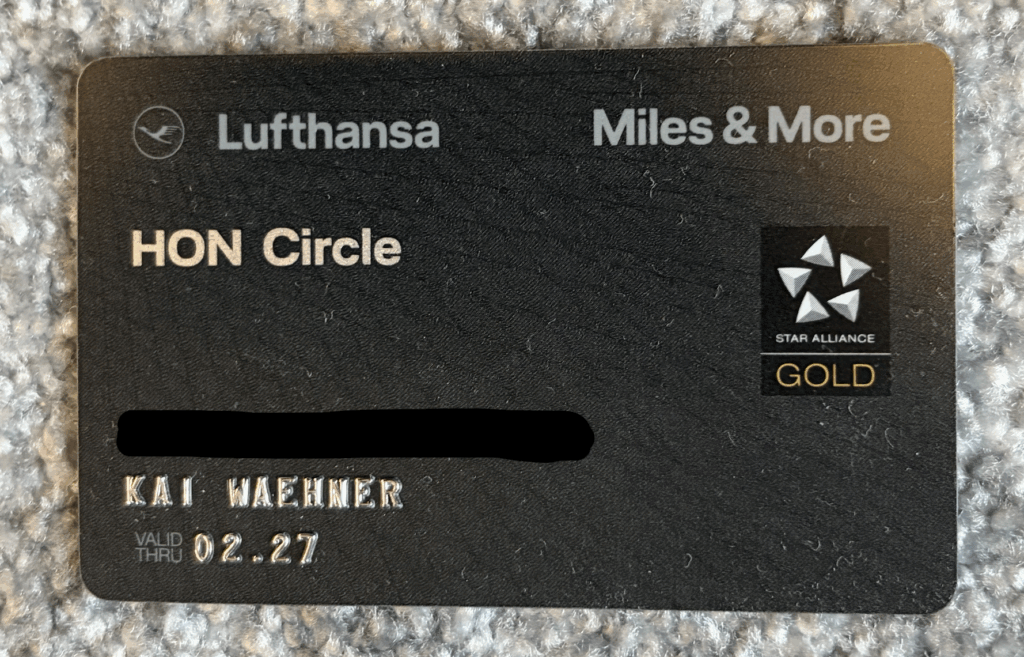
At smaller airports such as Nuremberg, Lufthansa has outsourced its ground handling. There is no Lufthansa staff at the counter, which often leads to confusion. A typical example: when asking to add the HON Circle number to my booking at check-in, the agent responded, “Does that have anything to do with Lufthansa?” They only knew the standard status levels Senator (gold) or Frequent Traveller (silver), but not the rare HON status (black).
Ongoing Challenges with Lufthansa IT
After working more than 15 years in the IT and software industry, it is painful to see how weak Lufthansa’s digital systems still are. The mobile app and website, in particular, are far behind what a global premium brand should offer.
Even the best customer service cannot fully help if the IT systems behind it are not reliable. Problems with check-in, seat reservations, and rebookings occur regularly, especially when multiple Lufthansa Group airlines or partner carriers are involved. Brace yourself: you’re entering the painfully long IT section…
Legacy Systems, Batch Jobs, and Slow Performance
System performance is slow because of numerous legacy backend systems spread across different Lufthansa Group airlines. Data inconsistencies across systems cause frequent problems. Many processes still run in nightly batch jobs, meaning that customer service and passengers often do not have up-to-date information when needed.
Online rebooking remains complicated and often does not work at all. In most cases, it still requires a phone call, even though the new chatbot can at least manage simple cases in the meantime.
There is still no working single login for all airlines in the Lufthansa Group. It would be great to simply stay logged in on the website… Just like on Gmail, LinkedIn, or Facebook.
For whatever reason, Lufthansa also cannot store passport data properly. It has to be entered manually every single time when checking in online or via the mobile app for non-Schengen international flights.
Seat reservations and upgrades often fail or are simply not possible across the group because the systems are not fully integrated. For instance, I often fly with Air Dolomiti to London. Although it is part of the Lufthansa Group, it runs on different systems, and there is no option to cash upgrade through the Lufthansa app or otherwise.
The new user interface of the website looks more modern, but the backend issues are still there. At least Lufthansa has moved past the embarrassing IBM WebSphere middleware error screens from earlier years. Even low-cost carriers like Ryanair now offer a faster and smoother mobile app experience. The slow backend continues to frustrate everyone, as it can take 20 to 30 seconds to get a response after clicking simple actions like “change flight” or searching for alternative connections. Because I am used to this at Lufthansa, I am always surprised by how quickly and smoothly I can rebook a flight with Star Alliance partner United, often in just a few seconds and without any error messages.
Miles posting after flights can take several days – not only for partner airlines like United but even for flights operated by Lufthansa itself – while 3rd party online retailers credit points to the same Miles&More backend within seconds. It could be done much better. When landing in Doha with Qatar Airways last year and turning on my phone, I immediately received a push notification with suggestions on how to spend my new miles in the airport shops before my connecting flight. The loyalty and reward world is fascinating, and if you are a bit more technical, you can read my blog about a Real-Time Customer Loyalty and Rewards Platform, which includes examples across industries from Virgin Australia, Porsche, and Disney+ Hotstar.
The IT and software complexity is understandable. Integrating multiple airlines such as Lufthansa, SWISS, Austrian, Brussels Airlines, and Eurowings is not easy. Still, it should not be an excuse for persistent reliability problems that I continue to see almost every week:
HON Status Activation: A Showcase of IT Gaps
When reaching HON Circle status, several technical issues became visible immediately. The status was not activated across all systems for about two days, so I could not use any of the new services on my next flights. The service teams could not see me as a HON member in their systems and therefore denied access to the lounge and limousine service.
Even after the status appeared in the app, my existing bookings (around ten at the time) were not updated. I only noticed after check-in that my HON number was missing. The hotline had to manually update the booking, and I had to check in again. All future flights needed the same manual correction. In some cases, even the agents at the counter could not fix it due to IT errors. The HON hotline could update the number, but the ticket still did not show HON, which meant no boarding group one, no limousine service in Frankfurt, and unnecessary discussions to access the First Class Lounge. Knowing that the same issue would happen again on the return flight made it even more frustrating.
All this happened after Lufthansa had publicly promoted the HON recognition campaign in 2024, including onboard greetings for new HON members. It was a clear example of marketing and IT being out of sync.
Loyalty and rewards programs should act as a growth engine, not just a cost center. The technical foundation needs to support that.
Digital Friction in a First Class World
To Lufthansa’s credit, some progress is visible. The Lufthansa Group is gradually unifying customer accounts through the Lufthansa Group Travel ID, which now includes Lufthansa, SWISS, Austrian, Brussels, and Eurowings. The rollout was rough, with migration issues and login errors, but it now works more reliably. This should eventually (hopefully) improve things like seat reservations and rebooking for codeshare flights.
However, problems persist.
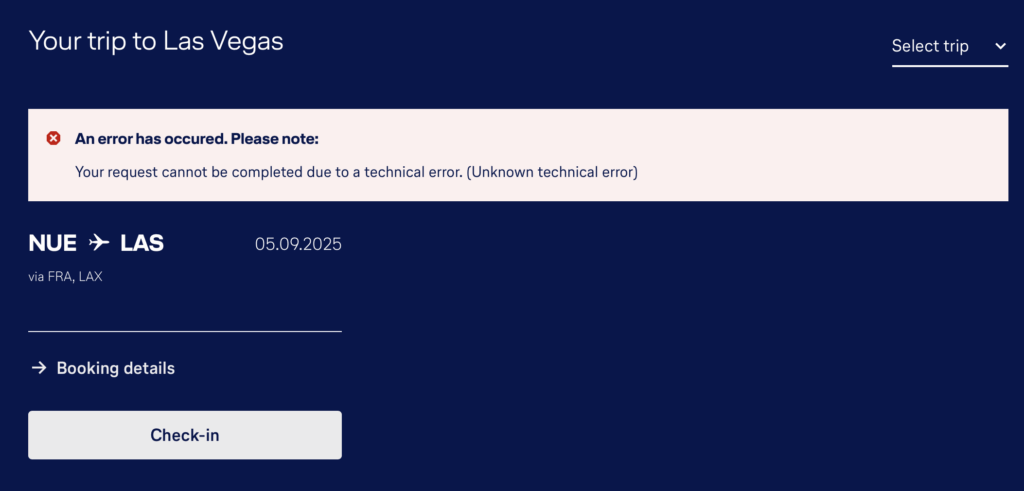
Common examples include receiving a check-in email, logging in, and seeing no flight information, followed by an “unknown error” when trying again. The mobile app has improved slightly, but even simple tasks such as paying for a cash upgrade often fail with a strange error message.
Passport data, home address, and Global Entry respectively TSA PreCheck numbers for US flights must still be re-entered for every flight because the system cannot store them permanently. And before you ask: Yes, I am already registered for Lufthansa’s Travel ID which should actually solve this issue.
Come on, Lufthansa: We are not living in the 2000s anymore!
At least there is a promising outlook: Amadeus, one of the world’s largest travel technology providers powering booking, check-in, and passenger management systems for many airlines, is currently working with Lufthansa on a digital ID wallet. This new feature could simplify identity verification and check-in with a single tap, removing the need to repeatedly enter passport details or loyalty credentials. If implemented well, it could finally deliver a modern, seamless experience across Lufthansa’s digital platforms. Realistically, though, it will take a few more years before it’s fully rolled out.
Looking Ahead as a Lufthansa HON Circle Member
HON Circle status was a major milestone, and I plan to keep it as long as my business travel stays at the current pace. The benefits are simply too valuable. I spend several thousand euros of my own money to enjoy the full First Class experience on every flight – whether it’s long haul or domestic, in Economy, Business, or First class. The comfort, service, and efficiency make frequent travel far less exhausting and much more productive.
The only real concern would be negative program changes like even tougher qualification rules, limited lounge access (e.g., in Economy Class), or restrictions on limousine service. Any such move would significantly reduce the value of the HON experience.
Similarly, cutting key feeder flights, especially the three to four daily Nuremberg–Frankfurt connections would make travel far less convenient – and HON status no longer viable for me. I’m definitely not taking a train or bus to Munich or Frankfurt every week.
For now, my strategy remains clear: keep the HON Circle status as long as Lufthansa maintains the high level of service and benefits that make it worthwhile. Especially when regularly connecting in Frankfurt, the HON services (like limousine transfers, private security, and First Class lounge access) are invaluable. I’m willing to continue spending thousands of euros every year. But only as long as the Lufthansa Group maintains today’s premium First Class experience and full recognition of HON Circle members.