Confluent and Databricks for Data Integration and Stream Processing
Read More

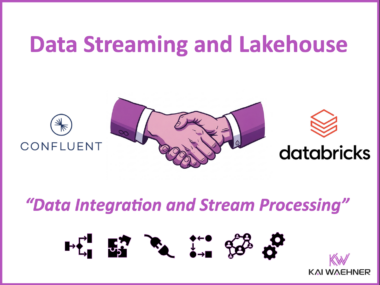
Confluent Data Streaming Platform vs. Databricks Data Intelligence Platform for Data Integration and Processing

This blog explores how Confluent and Databricks address data integration and processing in modern architectures. Confluent provides real-time, event-driven pipelines connecting operational systems, APIs, and batch sources with consistent, governed data flows. Databricks specializes in large-scale batch processing, data enrichment, and AI model development. Together, they offer a unified approach that bridges operational and analytical workloads. Key topics include ingestion patterns, the role of Tableflow, the shift-left architecture for earlier data validation, and real-world examples like Uniper’s energy trading platform powered by Confluent and Databricks.
Read More
Data Sharing for MVNO Growth and Beyond with Data Streaming in the Telco Industry
Read More

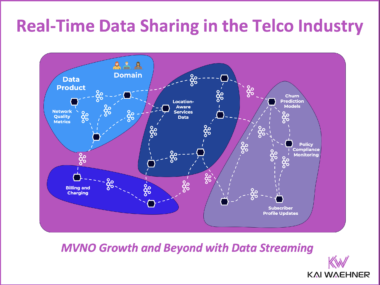
Real-Time Data Sharing in the Telco Industry for MVNO Growth and Beyond with Data Streaming

The telecommunications industry is transforming rapidly as Telcos expand partnerships with MVNOs, IoT platforms, and enterprise customers. Traditional batch-driven architectures can no longer meet the demands for real-time, secure, and flexible data access. This blog explores how real-time data streaming technologies like Apache Kafka and Flink, combined with hybrid cloud architectures, enable Telcos to build trusted, scalable data ecosystems. It covers the key components of a modern data sharing platform, critical use cases across the Telco value chain, and how policy-driven governance and tailored data products drive new business opportunities, operational excellence, and regulatory compliance. Mastering real-time data sharing positions Telcos to turn raw events into strategic advantage faster and more securely than ever before.
Read More
Fraud Prevention in Mobility Services with Data Streaming using Apache Kafka and Flink with AI Machine Learning
Read More

Fraud Detection in Mobility Services (Ride-Hailing, Food Delivery) with Data Streaming using Apache Kafka and Flink

Mobility services like Uber, Grab, and FREE NOW (Lyft) rely on real-time data to power seamless trips, deliveries, and payments. But this real-time nature also opens the door to sophisticated fraud schemes—ranging from GPS spoofing to payment abuse and fake accounts. Traditional fraud detection methods fall short in speed and adaptability. By using Apache Kafka and Apache Flink, leading mobility platforms now detect and block fraud as it happens, protecting their revenue, users, and trust. This blog explores how real-time data streaming is transforming fraud prevention across the mobility industry.
Read More
Apache Kafka 4.0 - The Business Case for Data Streaming at Enterprise Scale
Read More

Apache Kafka 4.0: The Business Case for Scaling Data Streaming Enterprise-Wide

Apache Kafka 4.0 represents a major milestone in the evolution of real-time data infrastructure. Used by over 150,000 organizations worldwide, Kafka has become the de facto standard for data streaming across industries. This article focuses on the business value of Kafka 4.0, highlighting how it enables operational efficiency, faster time-to-market, and architectural flexibility across cloud, on-premise, and edge environments. Rather than detailing technical improvements, it explores Kafka’s strategic role in modern data platforms, the growing data streaming ecosystem, and how enterprises can turn event-driven architecture into competitive advantage. Kafka is no longer just infrastructure—it’s a foundation for digital business
Read More
Event-Driven Agentic AI with Data Streaming using Apache Kafka and Flink
Read More

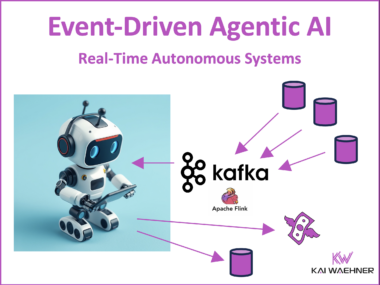
How Apache Kafka and Flink Power Event-Driven Agentic AI in Real Time

Agentic AI marks a major evolution in artificial intelligence—shifting from passive analytics to autonomous, goal-driven systems capable of planning and executing complex tasks in real time. To function effectively, these intelligent agents require immediate access to consistent, trustworthy data. Traditional batch processing architectures fall short of this need, introducing delays, data staleness, and rigid workflows. This blog post explores why event-driven architecture (EDA)—powered by Apache Kafka and Apache Flink—is essential for building scalable, reliable, and adaptive AI systems. It introduces key concepts such as Model Context Protocol (MCP) and Google’s Agent-to-Agent (A2A) protocol, which are redefining interoperability and context management in multi-agent environments. Real-world use cases from finance, healthcare, manufacturing, and more illustrate how Kafka and Flink provide the real-time backbone needed for production-grade Agentic AI. The post also highlights why popular frameworks like LangChain and LlamaIndex must be complemented by robust streaming infrastructure to support stateful, event-driven AI at scale.
Read More
Shift Left Architecture at Siemens with Stream Processing using Apache Kafka and Flink
Read More

Shift Left Architecture at Siemens: Real-Time Innovation in Manufacturing and Logistics with Data Streaming

Industrial enterprises face increasing pressure to move faster, automate more, and adapt to constant change—without compromising reliability. Siemens Digital Industries addresses this challenge by combining real-time data streaming, modular design, and Shift Left principles to modernize manufacturing and logistics. This blog outlines how technologies like Apache Kafka, Apache Flink, and Confluent Cloud support scalable, event-driven architectures. A real-world example from Siemens’ Modular Intralogistics Platform illustrates how this approach improves data quality, system responsiveness, and operational agility.
Read More
The Importance of Focus for Software and Cloud Vendors - Data Streaming with Apache Kafka and Flink
Read More

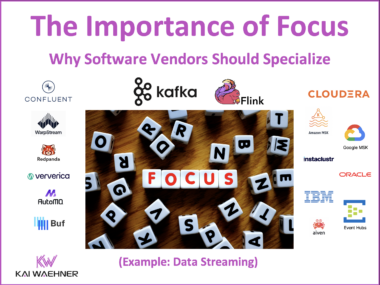
The Importance of Focus: Why Software Vendors Should Specialize Instead of Doing Everything (Example: Data Streaming)

As real-time technologies reshape IT architectures, software vendors face a critical decision: specialize deeply in one domain or build a broad, general-purpose stack. This blog examines why a focused approach—particularly in the world of data streaming—delivers greater innovation, scalability, and reliability. It compares leading platforms and strategies, from specialized providers like Confluent to generalist cloud ecosystems, and highlights the operational risks of fragmented tools. With data streaming emerging as its own software category, enterprises need clarity, consistency, and deep expertise. In this post, we argue that specialization—not breadth—is what powers mission-critical, real-time applications at global scale.
Read More
Read More

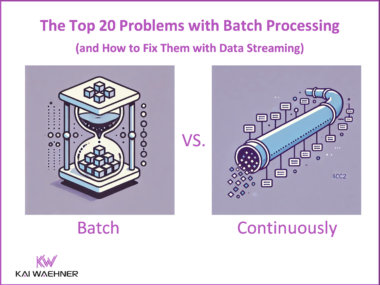
The Top 20 Problems with Batch Processing (and How to Fix Them with Data Streaming)

Batch processing introduces delays, complexity, and data quality issues that modern businesses can no longer afford. This article outlines the most common problems with batch workflows—ranging from outdated insights to compliance risks—and illustrates each with real-world examples. It also highlights how real-time data streaming offers a more reliable, scalable, and future-proof alternative.
Read More
The Strangler Fig Design Pattern - Migration and Replacement of Legacy IT Applications with Data Streaming using Apache Kafka
Read More

Replacing Legacy Systems, One Step at a Time with Data Streaming: The Strangler Fig Approach

Modernizing legacy systems doesn’t have to mean a risky big-bang rewrite. This blog explores how the Strangler Fig Pattern, when combined with data streaming, enables gradual, low-risk transformation—unlocking real-time capabilities, reducing complexity, and supporting scalable, cloud-native architectures. Discover how leading organizations are using this approach to migrate at their own pace, stay compliant, and enable new business models. Plus, why Reverse ETL falls short and streaming is the future of IT modernization.
Read More
Replacing OT Middleware with Data Streaming using Kafka and Flink for Cloud-Native Industrial IoT with MQTT and OPC-UA
Read More

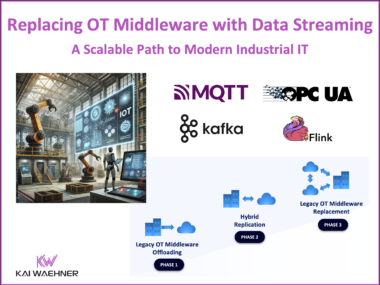
Modernizing OT Middleware: The Shift to Open Industrial IoT Architectures with Data Streaming

Legacy OT middleware is struggling to keep up with real-time, scalable, and cloud-native demands. As industries shift toward event-driven architectures, companies are replacing vendor-locked, polling-based systems with Apache Kafka, MQTT, and OPC-UA for seamless OT-IT integration. Kafka serves as the central event backbone, MQTT enables lightweight device communication, and OPC-UA ensures secure industrial data exchange. This approach enhances real-time processing, predictive analytics, and AI-driven automation, reducing costs and unlocking scalable, future-proof architectures.
Read More